
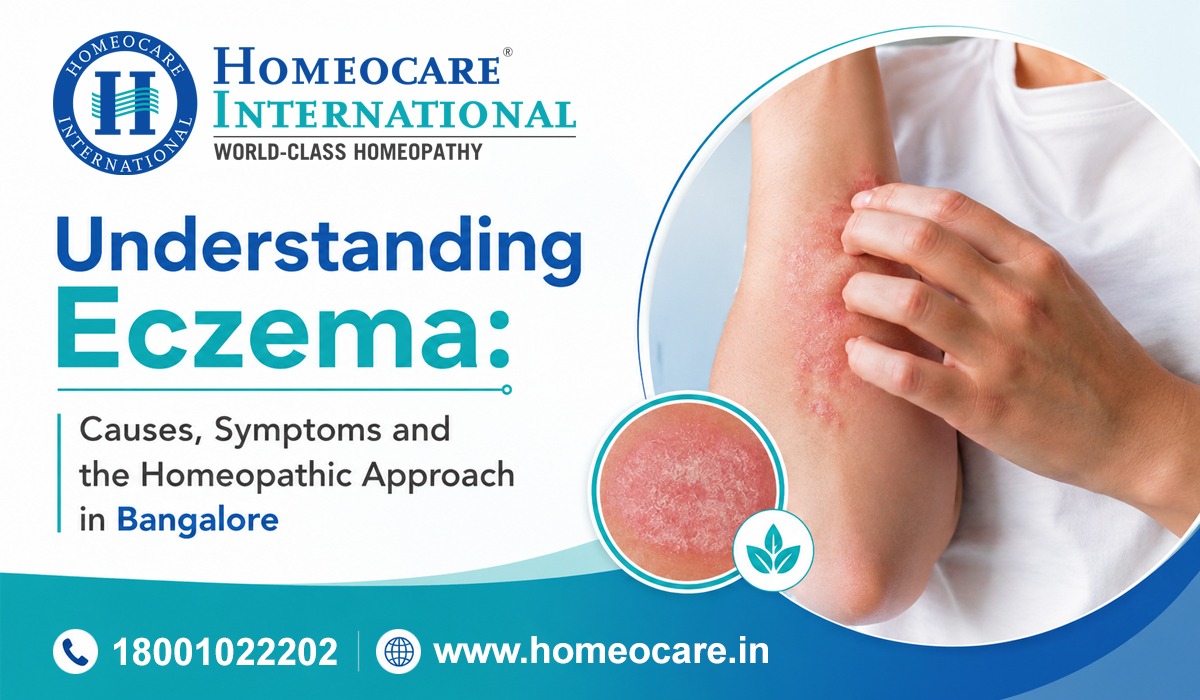
What is Eczema?
Eczema is more than just a skin condition it tends to interfere with daily comfort, sleep, and confidence. In a city like Bangalore, where pollution, climate fluctuations, and lifestyle stressors are common, eczema cases are increasingly reported across age groups. Homeopathy Treatment for Eczema offers a holistic and individualized approach that focuses not only on the skin but also on internal imbalances. Eczema, medically known as Atopic Dermatitis, is a chronic inflammatory skin disorder characterized by irritation, redness, and itching. It often occurs in cycles, flare-ups followed by periods of remission.
Rather than being just a superficial issue, eczema is often linked to immune dysfunction, hypersensitivity, or internal imbalances.
Symptoms of Eczema
- Intense itching (often worse at night)
- Dry, sensitive skin
- Red or inflamed patches
- Thickened, scaly skin over time
- Small fluid-filled blisters (in some cases)
- Cracked or oozing skin
- Skin discoloration
Triggers and Causes of Eczema
Eczema can be triggered or aggravated by different factors, and triggers vary from person to person. Common factors include:
- Soaps, detergents and harsh skincare products
- Fragrances, cosmetics and certain chemicals
- Dust, pollen and other environmental allergens
- Extreme temperatures or sudden changes in weather
- Dry air and low humidity
- Sweat and excessive heat
- Certain fabrics, particularly rough or irritating materials
- Stress and emotional strain
- Skin infections
- Excessive bathing or exposure to hot water
- Scratching or repeated friction on the skin
Types of Eczema
Eczema is a group of inflammatory skin conditions that can cause dryness, itching, redness and irritation. Different types of eczema can affect people in different ways.
- Atopic Dermatitis
Atopic dermatitis is the most common form of eczema. It often causes dry, itchy and inflamed skin and may develop during childhood, although adults can also experience it.
- Contact Dermatitis
Contact dermatitis occurs when the skin reacts to an irritant or allergen. Common triggers include soaps, detergents, cosmetics, fragrances, metals and certain chemicals.
- Dyshidrotic Eczema
Dyshidrotic eczema usually affects the hands and feet and may cause small, intensely itchy blisters. The affected skin can become dry, cracked and uncomfortable.
- Nummular Eczema
Nummular eczema causes distinctive round or coin-shaped patches on the skin. The patches may be itchy, dry, scaly or sometimes develop crusting.
- Seborrheic Dermatitis
Seborrheic dermatitis commonly affects areas with a higher concentration of oil glands, such as the scalp, face and upper chest. It may cause flaky skin, redness and itching.
- Stasis Dermatitis
Stasis dermatitis generally develops on the lower legs and is associated with problems with blood circulation. It can cause swelling, skin discolouration, dryness and irritation.
Common Eczema Complications
Persistent or severe eczema can sometimes lead to complications, particularly when the skin barrier is damaged or frequent scratching occurs. Common complications include:
Skin infections: Scratching can create breaks in the skin, allowing bacteria or other microorganisms to enter.
Thickened skin: Repeated scratching and rubbing can cause the skin to become thicker and more leathery.
Skin discolouration: Areas affected by eczema may temporarily become darker or lighter.
Sleep disturbances: Persistent itching can make it difficult to sleep comfortably.
Bleeding or open sores: Excessive scratching can damage the skin and cause wounds.
Impact on daily activities: Persistent itching and discomfort may affect concentration, work, studies and overall quality of life.
When Should You See a Doctor for Eczema?
Consider seeing a doctor if eczema symptoms are persistent, recurrent or becoming increasingly difficult to manage. Professional evaluation is particularly important when:
- The rash is spreading or becoming more severe.
- Itching is interfering with sleep or daily activities.
- The skin becomes painful, swollen, warm or develops discharge.
- There are signs of a possible skin infection.
- The condition does not improve with basic skincare measures.
- Frequent flare-ups are affecting your quality of life.
- You are uncertain whether the skin condition is eczema or another condition such as psoriasis.
Eczema vs Psoriasis: What’s the Difference?
Eczema and psoriasis are both inflammatory skin conditions, but they differ in their causes, appearance and symptoms.
- Eczema commonly causes dry, itchy, red and irritated skin and may be triggered by allergens, irritants, weather changes or stress. Psoriasis is an immune-mediated condition that typically causes well-defined, thick patches of skin covered with silvery-white scales.
- Eczema commonly affects areas such as the face, hands and skin folds, while psoriasis frequently appears on the scalp, elbows and knees.
Since both conditions can sometimes appear similar, consulting our expert homeopathy doctors can help with accurate identification and appropriate management.
Homeopathy Treatment for Eczema
Homeopathy treatment approaches eczema from a holistic and individualized standpoint. Rather than suppressing symptoms, it aims to address the root cause, particularly the internal imbalance of the immune system. Emphasis on healing rather than temporary relief and it is safe for all age groups, including children. It is also a long-term management for chronic and recurrent eczema. Conventional treatments often provide symptomatic relief, whereas homeopathy aims at deep, sustained healing.
How Constitutional Homeopathy Approach works
At Homeocare International, constitutional treatment is a personalized therapeutic approach where the remedy is selected based on the individual’s complete profile, not just the disease.
The treatment process begins with an extensive case evaluation, where the practitioner gathers detailed information not only about the visible symptoms, such as itching, dryness, and inflammation, but also about the patient’s emotional tendencies, lifestyle patterns, dietary habits, and past medical history. This comprehensive profiling enables the physician to identify the patient’s “constitution,” which becomes the basis for remedy selection.
Why Homeopathy is best to treat eczema
In the context of an urban environment like Bangalore, where factors such as pollution, dietary changes, and psychological stress frequently exacerbate skin disorders, constitutional homeopathy offers a structured and personalized pathway toward sustained relief. By integrating physical, mental, and environmental dimensions of health, the treatment approach at Homeocare International seeks not only to manage eczema effectively but also to enhance overall well-being, thereby reducing the likelihood of recurrent episodes over time.
 Call: 1800102 2202 to book your free consultation today at Homeocare International.
 https://www.homeocare.in/homeopathy-eczema-treatment.html