
Are joint pain, stiffness in the joint or swelling slowing down your day? If it is, do not confuse it with normal pain. When simple movements feel heavy, mornings begin with a stiff back or knees and your mobility and quality of life start to decline, these are clear symptoms of arthritis. If you are struggling with this or searching for arthritis types, arthritis causes or the right arthritis treatment, you are on the right page.
In this blog, our expert homeopathic doctors at Homeocare International explain arthritis in a clear and simple way, including the different types, why it develops and how treatment works. With more than 60 clinics and more than 300 experienced doctors, we offer constitutional arthritis treatment in homeopathy, including homeopathy treatment for arthritis in Bangalore, homeopathy treatment for arthritis in Hyderabad and homeopathy treatment for arthritis in Chennai, all focused on long term comfort, reduced stiffness and better movement.
Keep reading to know what arthritis is, its causes, types and treatments.

Understanding Arthritis: What Is It?
Arthritis is a word doctors use when one or more joints stay painful, stiff or swollen for a long time. It affects the inside of the joint where the cartilage cushions the bone and the synovium produces fluid so the joint can move smoothly. When these structures stop working properly, the bone and ligament also come under stress and normal movement becomes difficult.
In many people, arthritis behaves like a chronic problem, which means it stays for months or years. At times it may feel better and then suddenly worsen again. These ups and downs are called flare and remission. Some forms are inflammatory and autoimmune, where the immune system itself irritates the joint. Others are degenerative and happen due to wear and tear over many years.
Signs of Arthritis: Common Symptoms You Must Not Ignore
You may notice signs like these when arthritis starts affecting daily function.
- Aching pain or tenderness in one or more joints.
- Stiffness after rest, especially morning stiffness that takes time to ease.
- Visible swelling, warmth and redness over the joint.
- Limited motion when you try to bend, straighten or rotate the joint.
- Difficulty with grip, climbing stairs, getting up from a chair or walking long distances.
- A feeling of fatigue and reduced quality of life because every movement needs more effort.
When these symptoms become frequent, arthritis begins to affect your mobility, independence and confidence. This is when you must note that it needs proper evaluation and treatment rather than self medication.
Arthritis Types: The Most Common Forms You Should Know!
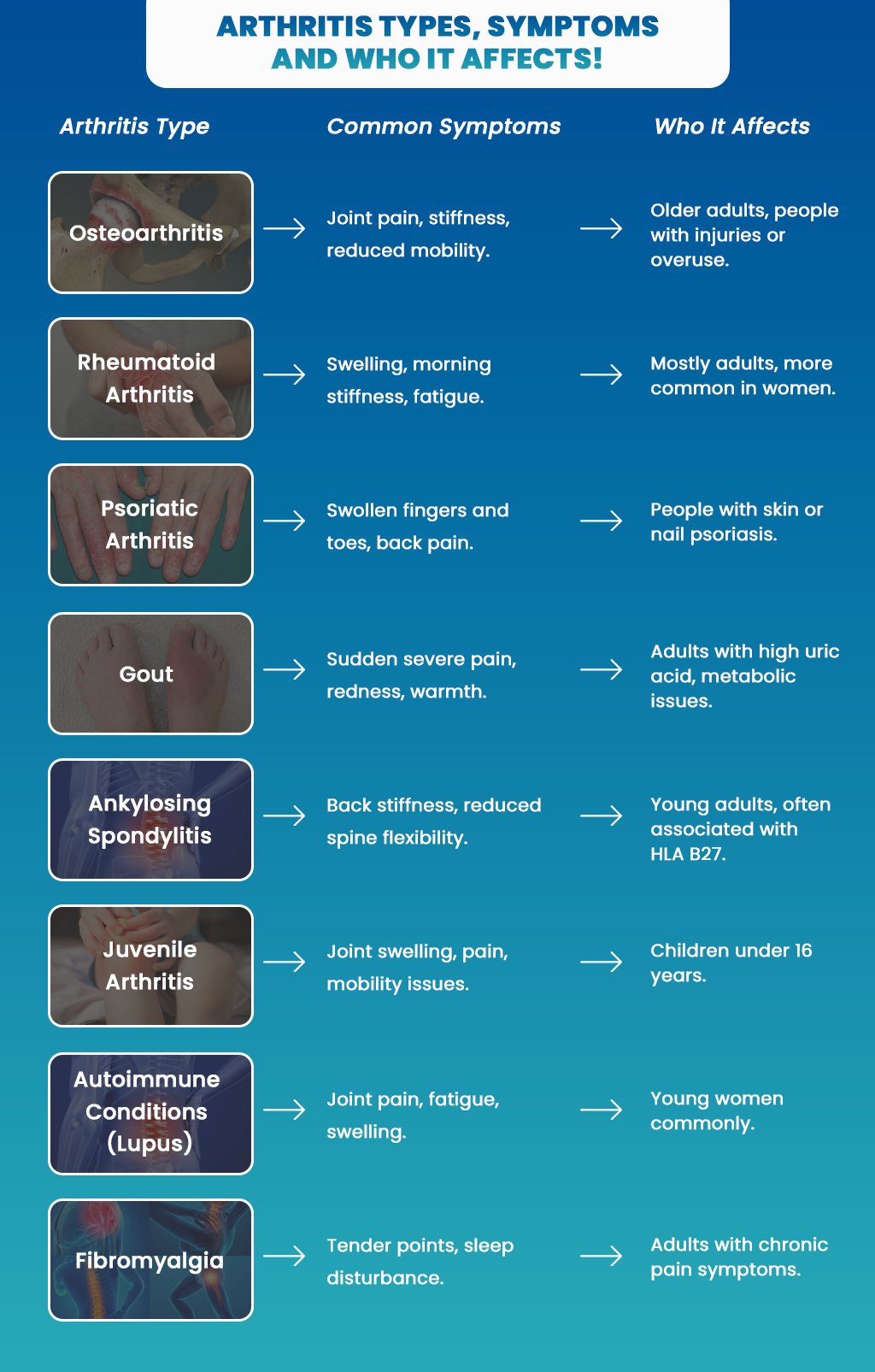
Arthritis is not the same for everyone. Different types behave differently, affect different joints and need different treatment plans. Knowing which type you have helps you understand your pain pattern and what kind of care can support you best.
Here are the main arthritis types your doctor usually checks for.
-
Osteoarthritis
Osteoarthritis happens when the cushion inside your joint slowly wears out with age or overuse. This makes movement harder and more painful. It usually affects the knees, hips, spine and hands. People who are overweight or have old injuries often feel it more.
-
Rheumatoid Arthritis
Rheumatoid arthritis occurs when the body’s own immune system starts irritating the joints. This causes swelling, pain, tiredness and stiffness, especially in the morning. It often affects the same joints on both sides of the body, like both hands or both knees.
-
Psoriatic Arthritis
Psoriatic arthritis is linked to psoriasis, a skin condition. It can cause swollen fingers and toes, back pain and changes in the nails. If it is not treated on time, the joints can gradually get damaged.
-
Gout
Gout happens when uric acid builds up in the body and forms sharp crystals inside a joint. This leads to sudden, severe pain, usually in the big toe, although other joints can get affected too.
-
Ankylosing Spondylitis
Ankylosing spondylitis mainly affects the spine and lower back. People often feel stiffness when they wake up, which improves once they start moving. If it continues for many years, the spine may become less flexible.
-
Juvenile Arthritis and Autoimmune Conditions
Children can also get arthritis. Some may have pain and swelling in just a few joints, while others may have many joints involved. Conditions like lupus can also cause joint pain and tiredness. Some people also experience widespread body pain and fatigue similar to fibromyalgia, which makes daily life more difficult.
Arthritis Causes: Why Does It Happen?
Arthritis causes are not the same for everyone. In some, it develops due to a combination of age, genes, lifestyle and the way the joints are used over the years. Understanding these causes helps you and your doctor plan better long term arthritis treatment.
Here are some of the most common arthritis causes your doctor will look at.
- As you get older, the cushioning inside your joints becomes thinner. This makes the bones rub more and increases the chances of osteoarthritis.
- If your parents or close family members have arthritis, especially rheumatoid arthritis or ankylosing spondylitis, your risk is naturally higher because certain traits run in families.
- Extra weight puts constant pressure on your knees, hips and spine. Over time, this can speed up joint wear and increase arthritis pain.
- Old injuries from sports, accidents or repetitive movements at work can weaken a joint. Years later, that same joint may develop arthritis because the cartilage did not fully recover.
- In conditions like rheumatoid arthritis, psoriatic arthritis and lupus, the immune system becomes overactive and starts irritating the joints. This leads to long lasting inflammation, swelling and stiffness.
- High uric acid can form sharp crystals in a joint, which causes sudden, severe pain known as gout. This pain often starts in one joint, especially the big toe.
- Standing for long hours, heavy lifting, poor posture or repeated bending all strain the joints. Over many years, this constant pressure can lead to arthritis.
- Smoking, chronic stress and lack of exercise can increase inflammation in the body, making arthritis symptoms stronger and healing slower.
- Hormonal changes and long-term illnesses like diabetes and thyroid disorders can increase the risk of certain arthritis types or make symptoms more intense.
How Doctors Diagnose Arthritis?
To start arthritis treatment, a proper diagnosis is the initial step. Here’s the complete list of steps and tests doctors suggest to diagnose the reason behind persistent and sharp joint pain.
- Detailed History. Your doctor asks when the pain started, which joints are affected, how long stiffness lasts, how often you get flare ups and how it affects your daily function.
- Physical Examination. The joints are checked for swelling, tenderness, warmth, range of movement and any early deformity or limitation.
- Blood Tests. These may include ESR and CRP to check inflammation, rheumatoid factor and anti CCP for rheumatoid arthritis, ANA for autoimmune conditions and uric level for gout.
- Imaging Tests. X-rays can show joint space narrowing and bone changes, ultrasound can detect early inflammation in the synovium and MRI can provide a detailed view of cartilage, bone and soft tissue.
- Joint Fluid Examination. In some cases, joint aspiration and synovial fluid analysis help confirm infection, gout or other crystal related conditions.
Why Choose Homeopathy for Arthritis Treatment?
Many people living with arthritis want more than temporary relief. They want less stiffness, fewer flare ups and better movement without relying only on strong medicines that cause side effects. This is where homeopathy becomes a meaningful part of arthritis management. It approaches the condition in a personalised and constitutional way, focusing on long term comfort rather than short term suppression of symptoms.
Homeopathy studies your pain pattern, stiffness duration, mobility, lifestyle, sleep, stress levels and day to day triggers. It helps your doctor understand when your joints hurt the most, how swelling behaves, how often flare cycles appear and how arthritis affects your overall function.
Based on this detailed assessment, homeopathy aims to support you in these ways.
- Reduce joint pain, stiffness and swelling,
- Improve flexibility and day to day mobility,
- Reduce flare frequency and flare intensity over time,
- Help you perform routine activities with more comfort and less strain,
- Support emotional balance, better sleep and overall quality of life.
Because homeopathy is natural, non-invasive and generally well tolerated, many patients use it along with their regular arthritis treatment. With regular follow up, it becomes a steady supportive system for long term arthritis care, especially when guided by experienced doctors at Homeocare International.
Book Your Arthritis Treatment Appointment at Homeocare International!
If joint pain, stiffness or swelling is already affecting your daily routine, do not wait for it to worsen. Early care can protect your joints, reduce flare ups and improve long term mobility. At Homeocare International, our expert homeopathic doctors create a personalised treatment plan based on your arthritis type, pain pattern and lifestyle so you get steady, long lasting relief.
Whether you are looking for homeopathy treatment for arthritis in Bangalore, homeopathy treatment for arthritis in Hyderabad or homeopathy treatment for arthritis in Chennai, our expert team of homeopathic doctors are ready to guide you.
Call 1800 102 2202 to book your arthritis free doctor consultation now and take the first step towards better movement and better quality of life.
Frequently Asked Questions
Can homeopathy help delay or avoid joint replacement surgery for arthritis?
In many early or moderate cases, homeopathy can help reduce pain, stiffness and inflammation, which may delay the need for joint replacement. At Homeocare International, your doctor will assess joint damage first, then suggest if homeopathic arthritis treatment can support you alongside your ortho plan.
How does homeopathy help in controlling arthritis flare ups during weather changes?
Homeopathy looks at how your joints react to cold, damp or seasonal shifts and selects remedies that match this pattern. With regular treatment and follow up at Homeocare International, many patients report fewer and milder flare ups during weather changes.
Is homeopathy safe for arthritis patients with diabetes, high blood pressure or thyroid issues?
Yes, homeopathic medicines are generally safe and can usually be taken along with diabetes, BP or thyroid medicines. At Homeocare International, doctors study your full medical history and coordinate arthritis treatment in homeopathy with your existing prescriptions.
Can homeopathy reduce long term dependence on painkillers for arthritis?
When homeopathy helps control pain, swelling and stiffness more steadily, many patients are able to use painkillers less often, under their doctor’s guidance. The goal at Homeocare International is not to stop your medicines suddenly, but to gradually improve comfort and function.
How long does homeopathic treatment take to show improvement in arthritis stiffness and mobility?
Mild to moderate arthritis may show early improvement in stiffness and mobility within a few weeks, while long standing cases usually take longer and need regular review. At Homeocare International, your doctor explains the expected timeline based on your arthritis type, age and joint condition.