

Morning stiffness, sore knees on the stairs, and a consistent joint pain that makes simple tasks feel heavy can drain your day. If this sounds familiar, the good news is that small, consistent lifestyle changes can ease pain, protect joints, and restore confidence in movement.
This guide gives you practical habits for reducing joint pain that work across different joint disorders, along with a clear path for long-term care. When home steps need clinical support, Homeocare International offers constitutional homeopathy treatment for joint pain across South India with 60 plus clinics and 300 plus experienced doctors.
Read on for everyday, doable changes, and see where joint pain treatment in homeopathy fits in for steady relief.
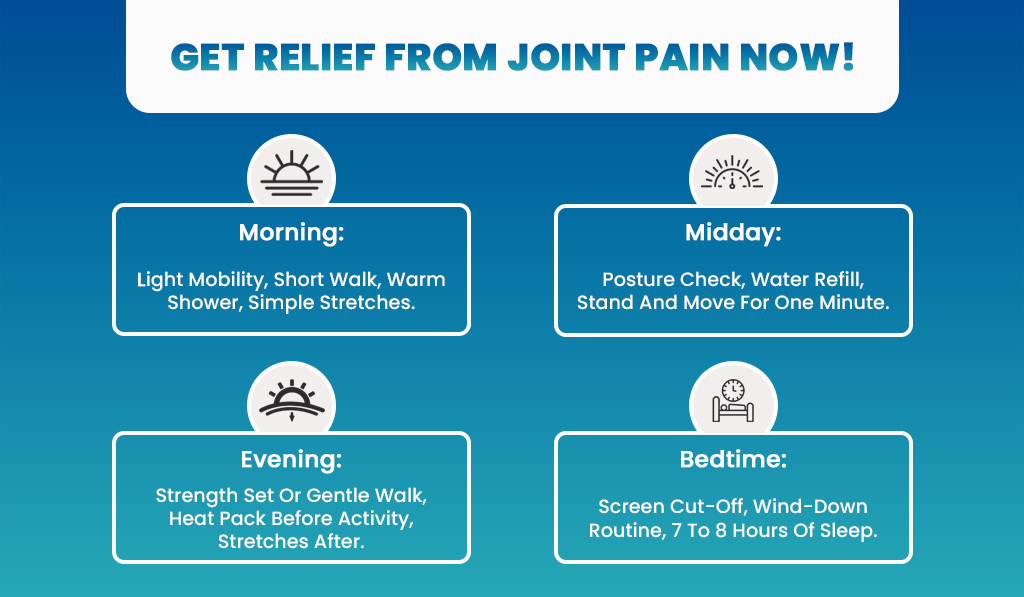
1) Move Low Impact Every Day
Movement is medicine for stiff joints. Short, low-impact sessions improve blood flow, lubricate cartilage, and reduce soreness without overloading sensitive areas.
- Walk 20 to 30 minutes most days, and break it into two shorter walks if that is easier.
- Mix in cycling, swimming, or an elliptical session to build endurance with low stress on knees and hips.
- Add three to five minutes of joint mobility drills for ankles, knees, hips, shoulders, and spine.
- Keep a simple progress log to track steps, minutes, and comfort levels.
Why It Helps: Gentle, regular movement supports cartilage nutrition, maintains range of motion, and calms pain receptors. It also improves mood and sleep, which both influence pain.
2) Strengthen the Support Muscles
Strong muscles act like shock absorbers around the joint. When hips, thighs, glutes, core, and back are stronger, joints carry less load.
- Do two short strength sessions per week.
- Prioritise bodyweight moves such as sit-to-stand, wall push-ups, bridges, clamshells, heel raises, and rows with a band.
- Start with one set of 8 to 12 controlled reps, then build to two or three sets as comfort allows.
- Focus on slow, pain-free form and breathe regularly.
Why It Helps: Better muscular support means improved alignment, less wobble at the joint, and reduced strain during walking, lifting, or climbing.
3) Stretch With Purpose
Stiff tissues restrict motion and make pain worse. Short, consistent stretching sessions can unlock daily comfort.
- Stretch after a warm shower when muscles are relaxed.
- Target hamstrings, calves, hip flexors, quadriceps, chest, and the upper back.
- Hold each stretch 20 to 30 seconds without bouncing, and breathe slowly.
- Add gentle range-of-motion work for the neck and shoulders if desk tension builds up.
Why It Helps: Regular flexibility work reduces pulling on the joint, improves posture, and makes strength and cardio sessions feel easier.
4) Eat Anti-Inflammatory and Hydrate Well
Food choices influence inflammation, energy, and recovery. Build simple, steady habits rather than strict diets.
- Base meals on vegetables, fruit, pulses, whole grains, nuts, and seeds.
- Include omega-3 sources like flaxseed, chia, walnuts, or fatty fish.
- Reduce ultra-processed foods, refined sugar, and deep-fried items.
- Sip water throughout the day. Aim for pale-yellow urine as a simple hydration cue.
- If weight is a factor, use mindful portions and lean proteins to support a slow, steady reduction.
Why It Helps: Balanced nutrition supports tissue repair, weight control, and lower inflammatory load, all of which help with reducing joint pain.
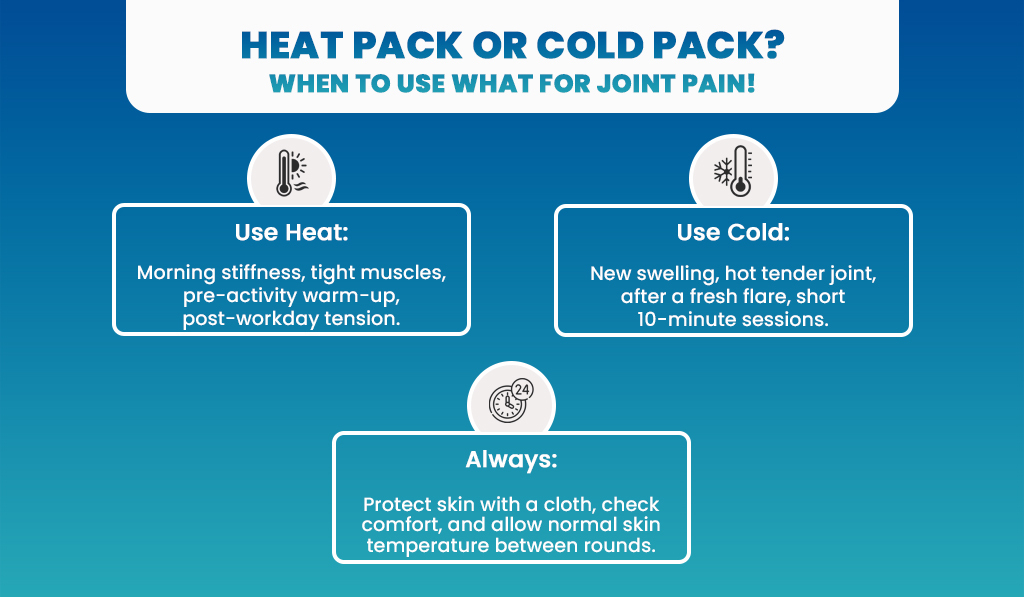
5) Use Heat and Cold the Smart Way
Thermal care is a simple tool you can use at home to settle flares or loosen stiff tissues.
- Use warm packs before activity to relax tight muscles. Apply 10 to 15 minutes.
- Use cold packs for new swelling or a fresh flare. Apply 10 minutes.
- Protect the skin with a thin cloth, and allow the skin to return to normal temperature between rounds.
- Alternate heat and cold if both stiffness and swelling are present.
Why It Helps: Warmth improves tissue elasticity for easier movement. Cold calms irritation when a joint feels hot, swollen, or tender.
6) Fix Posture and Set Up Your Space
Small ergonomic tweaks can remove constant micro-strain that fuels pain.
- Keep screens at eye level, shoulders relaxed, and feet flat on the floor.
- Change position every 30 to 40 minutes. Stand and stretch for one minute between work blocks.
- Use supportive footwear and replace worn-out insoles.
- For chores, hinge at the hips and knees instead of rounding the back.
- Consider a lightweight brace or elastic support during high-load tasks if your clinician approves.
Why It Helps: Better alignment spreads load evenly, reduces compensations, and protects sensitive joints during repetitive tasks.
7) Pace Your Day and Protect Sleep
Pain often worsens when you rush or push through fatigue. Pacing helps you do more with fewer flares.
- Break big tasks into smaller steps with quick rest breaks.
- Stack activities that use different body parts to avoid overloading one area.
- Keep a consistent sleep routine with 7 to 8 hours in a dark, cool room.
- Try a short wind-down: light stretching, warm shower, and a screen cut-off 45 minutes before bed.
Why It Helps: Pacing reduces overload cycles. Quality sleep improves pain thresholds, tissue recovery, mood, and focus.
Lifestyle Changes to Reduce Pain: Quick Checklist
- Track triggers, flares, and wins in a simple diary.
- Choose low-impact cardio three to five days per week.
- Strength train twice a week for hips, knees, core, and shoulders.
- Stretch most days, especially after warmth or a shower.
- Build anti-inflammatory plates and hydrate well.
- Use heat for stiffness, cold for fresh swelling.
- Fix ergonomics and change positions frequently.
- Pace tasks and protect sleep for recovery.
Safety and Red Flags
Self-management is powerful. But if you notice symptoms worsening, or any of the mentioned signs, it’s time to seek professional care for joint pain.
- Book a clinical visit if pain wakes you at night, if swelling or warmth persists, or if motion keeps getting harder despite good habits.
- Seek urgent care for sudden severe swelling, redness with fever, or an injury with joint deformity.
- Check with your doctor before major program changes if you have heart, lung, metabolic, or neurological conditions.
Homeopathy Treatment for Joint Pain: When to Consider?
Home carel helps many people make consistent progress. If stiffness persists, flares return frequently, or you live with different joint disorders like osteoarthritis, rheumatoid patterns, psoriatic involvement, gouty flares, or low-back inflammatory symptoms, joint pain treatment in homeopathy can add steady support.
A constitutional homeopathy treatment at Homeocare International studies your pain pattern, stiffness duration, mobility limits, sleep quality, stress, work demands, and lifestyle to guide individualized care. Many patients use homeopathy treatment for joint pain alongside physiotherapy and sensible daily changes for long-term comfort.
What to expect at Homeocare International:
- A structured assessment of pain, stiffness, function, and daily activity.
- Individualised constitutional remedies aligned to your joint pattern.
- Practical guidance for posture, heat and cold use, and weekly activity planning.
- Regular follow ups that review progress and fine-tune the plan.
With homeopathy clinics in Hyderabad, homeopathy hospitals in Chennai and Bangalore, and a wide network across South India, access is simple and follow-ups are convenient.
Book Your Free Consultation for Joint Pain at Homeocare International Now!
Relief grows when expert care meets daily consistency. Homeocare International delivers a constitutional approach that respects your routine and your goals. With 60+ clinics across South India and 300+ experienced doctors, you get:
- Personalised remedies that match your joint pattern and lifestyle.
- Clear, realistic weekly steps for movement, strength, stretching, and recovery.
- Practical coaching on heat, cold, ergonomics, pacing, and nutrition basics.
- Structured reviews that keep you progressing and prevent setbacks.
Ready to put these lifestyle changes into motion with a plan that sticks. Call 1800 102 2202 for a free consultation. Our homeopathic doctors will map your triggers, set achievable weekly steps, and design homeopathy treatment for joint pain that fits your life.
Whether you prefer homeopathy clinics in Hyderabad, homeopathy hospitals in Chennai, or another branch near you, our team will help you move with less pain and more confidence.
Frequently Asked Questions
Which habit helps first if I am very stiff in the morning?
Start with gentle heat for 10 minutes to loosen tissues, then do easy joint mobility and a five-minute walk. Follow with short, slow stretches after a warm shower to lock in the ease.
Can I combine physiotherapy, lifestyle changes, and homeopathy?
Yes. Combining physio exercises, daily habit changes, and constitutional homeopathy often gives steadier relief and better function. Keep one clinician as your coordinator so plans don’t clash.
How soon will I notice changes?
Many people feel easier mornings within two to four weeks if they stay consistent. Strength, stamina, and confidence usually build over six to twelve weeks with regular reviews.
Do small weight changes really help knees and hips?
Yes. Even a 5 to 10 percent weight reduction lowers joint load and can ease pain in stairs, long walks, and daily chores. Pair mindful portions with low-impact activity for best results.
When should I stop home care and see a doctor?
Book a visit if pain worsens week after week, swelling or warmth persists, or sleep and daily function decline. Sudden severe swelling, redness with fever, or a visible deformity needs urgent care.